Select your language

Two Instruments, One Idea

Expired

Two Instruments, One Idea

An interview with Max Dergunov, creator of AntoNinjA 2 and MaX Balalayka.

AntoNinjA 2

AntoNinjA 2 MINI interface

Where did the synth begin?

Max: Years after selling my Andromeda A6, I remembered what it felt like to work with it. You turn a control and the music starts moving. I wanted that depth in a form that fits a modern DAW session, where you can recall a project and run several instances. Apparently gear acquisition syndrome doesn’t disappear. It learns C++.

How did you test the idea?

Max: By making music. I used it on more than 22 finished productions during development. It played the musical parts except the drums. Drummers kept their job. The FULL interface gives you the entire engine, while MINI keeps the performance controls close to the track.
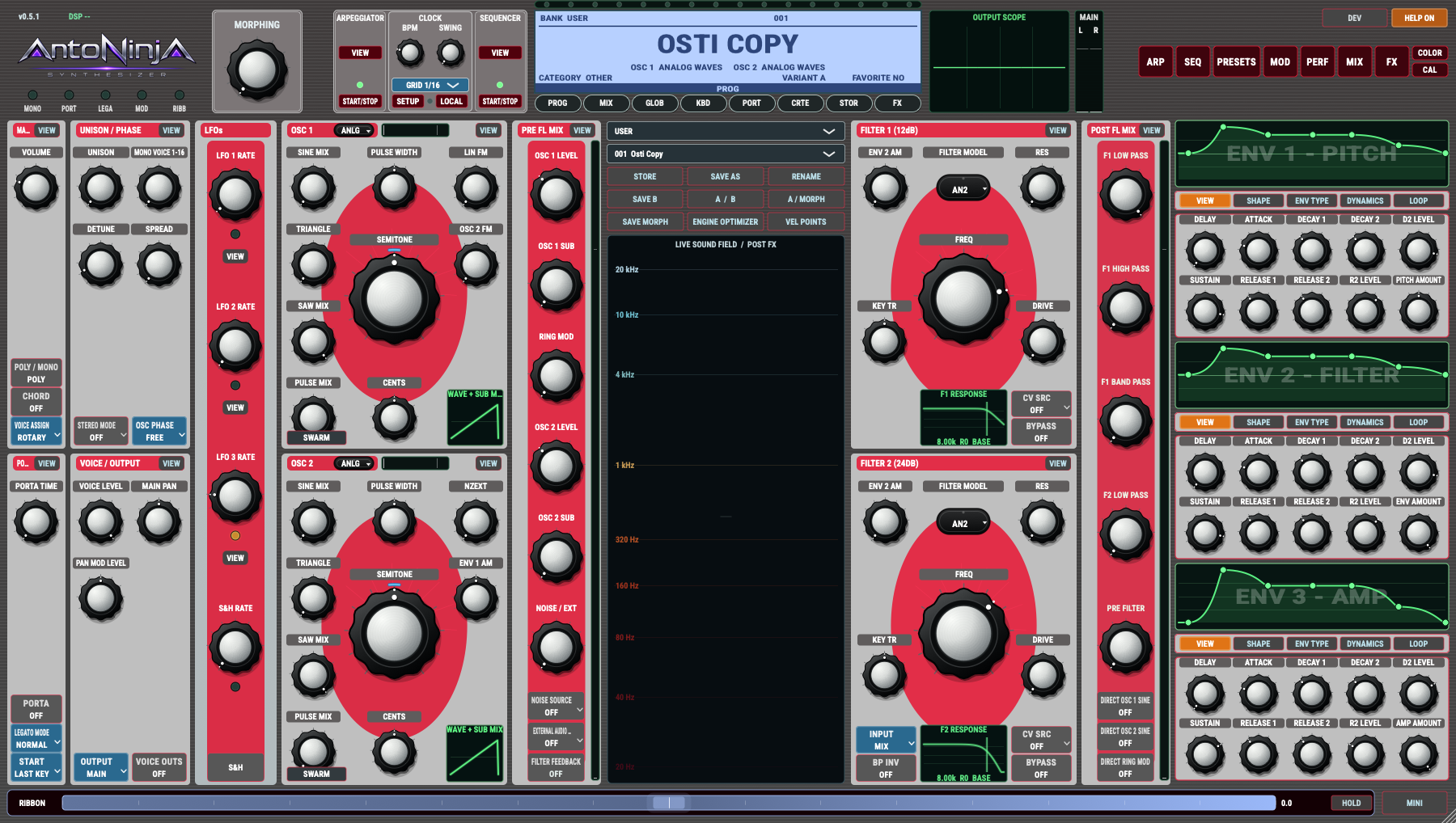
AntoNinjA 2 FULL interface

MaX Balalayka

MaX Balalayka virtual instrument

How did a balalaika end up in your Berlin studio?

Max: Around 2006, we were recording what I think was rap or hip-hop. I couldn’t find samples that sounded lively and playful, so I borrowed a professional balalaika for about a month. I recorded the simple parts I needed, then sampled the instrument myself and built my first EXS24 instrument in Logic Pro. I already called it MaX Balalayka.

What was difficult about making it play rhythms?

Max: Two nylon strings and one metal string. On a real balalaika, each note has to sit on a string you can actually finger. The old version played solos nicely, but programming a convincing rhythm in the MIDI editor took time. Now you can play a triad and the instrument handles the fingering and rhythm.

Why 24 rhythms and five versions of each?

Max: The 24 came from trying out different ways to play. The five variations let the rhythm change with the song, from a quieter verse to a more syncopated or energetic section. Pattern Calibration lets you create your own patterns, choose articulations and adjust the level, dynamics and length of each event. If you’ve worked in Logic’s MIDI editor, the principle will feel familiar.
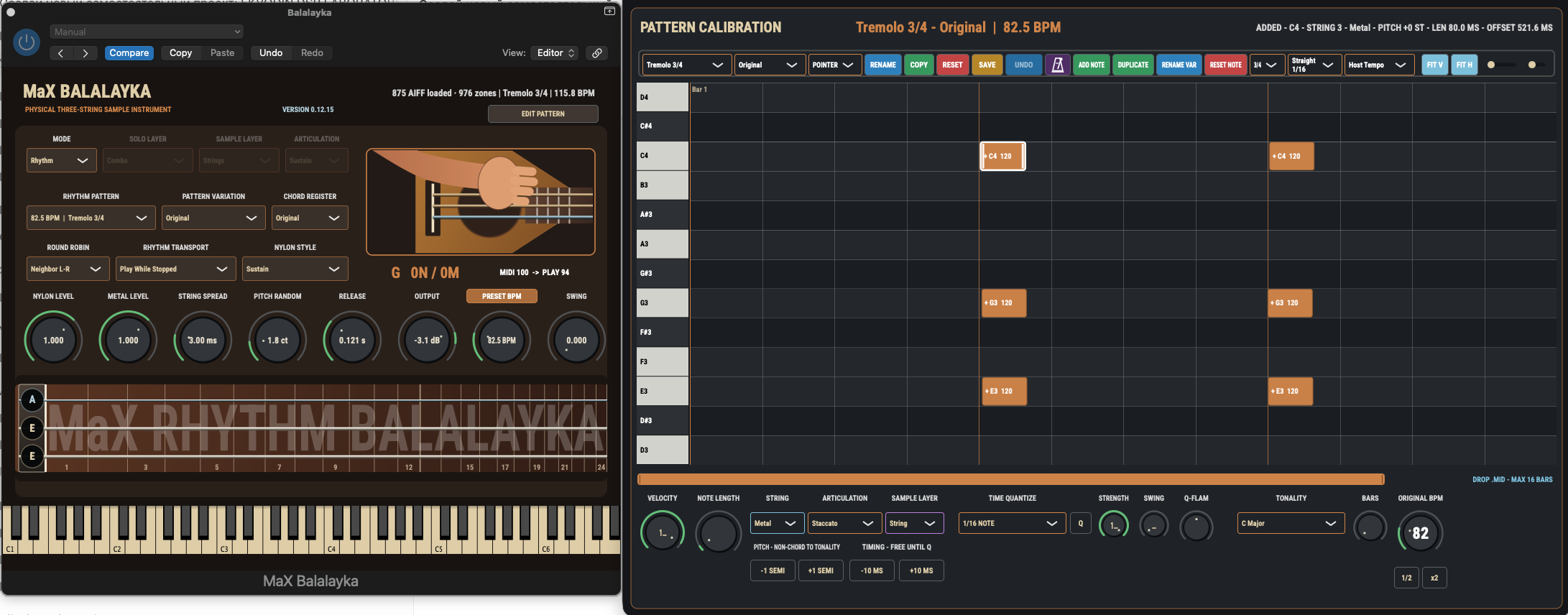
MaX Balalayka and the Pattern Calibration editor

What connects the two instruments?

AntoNinjA 2 builds sound from the ground up. MaX Balalayka brings the character of one acoustic instrument into the DAW. Both grew out of something Max needed in the studio: an instrument he could trust all the way from the first idea to the final render.

Two Instruments, One Idea

An interview with Max Dergunov, creator of AntoNinjA 2 and MaX Balalayka.

AntoNinjA 2

AntoNinjA 2 MINI interface

Where did the synth begin?

Max: Years after selling my Andromeda A6, I remembered what it felt like to work with it. You turn a control and the music starts moving. I wanted that depth in a form that fits a modern DAW session, where you can recall a project and run several instances. Apparently gear acquisition syndrome doesn’t disappear. It learns C++.

How did you test the idea?

Max: By making music. I used it on more than 22 finished productions during development. It played the musical parts except the drums. Drummers kept their job. The FULL interface gives you the entire engine, while MINI keeps the performance controls close to the track.

AntoNinjA 2 FULL interface

MaX Balalayka

MaX Balalayka virtual instrument

How did a balalaika end up in your Berlin studio?

Max: Around 2006, we were recording what I think was rap or hip-hop. I couldn’t find samples that sounded lively and playful, so I borrowed a professional balalaika for about a month. I recorded the simple parts I needed, then sampled the instrument myself and built my first EXS24 instrument in Logic Pro. I already called it MaX Balalayka.

What was difficult about making it play rhythms?

Max: Two nylon strings and one metal string. On a real balalaika, each note has to sit on a string you can actually finger. The old version played solos nicely, but programming a convincing rhythm in the MIDI editor took time. Now you can play a triad and the instrument handles the fingering and rhythm.

Why 24 rhythms and five versions of each?

Max: The 24 came from trying out different ways to play. The five variations let the rhythm change with the song, from a quieter verse to a more syncopated or energetic section. Pattern Calibration lets you create your own patterns, choose articulations and adjust the level, dynamics and length of each event. If you’ve worked in Logic’s MIDI editor, the principle will feel familiar.

MaX Balalayka and the Pattern Calibration editor

What connects the two instruments?

AntoNinjA 2 builds sound from the ground up. MaX Balalayka brings the character of one acoustic instrument into the DAW. Both grew out of something Max needed in the studio: an instrument he could trust all the way from the first idea to the final render.

Select your language